

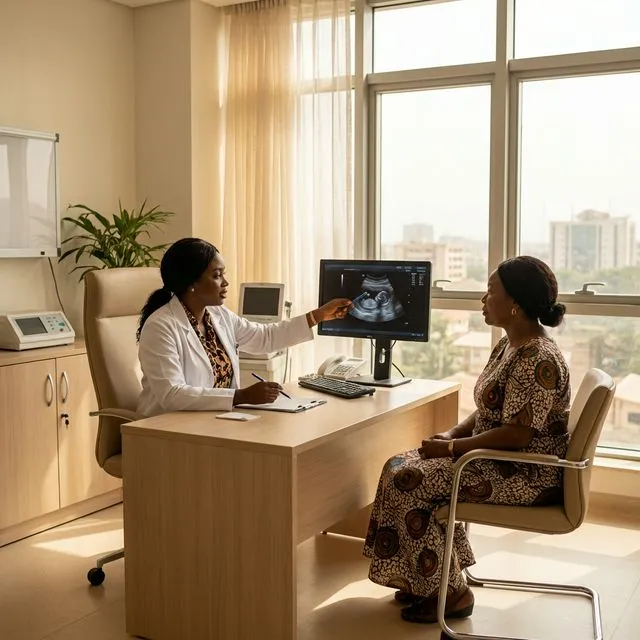
For thousands of women across Nigeria, the word "fibroids" carries a heavy weight. Often shrouded in cultural myths and spoken about in hushed tones, uterine fibroids remain one of the most overwhelmingly common—yet highly misunderstood—women's health issues in West Africa.
At Private Care Specialist Fertility Hospital in Abuja, we firmly believe that accurate medical knowledge is the ultimate antidote to fear. Whether you simply suspect you might have them, or you have already been diagnosed, this 2026 fully comprehensive guide details everything you absolutely need to know about fibroids: what they secretly are, exactly how they develop, and the precise modern medical pathways to finally living pain-free.
What Are Fibroids?
In the simplest of terms, uterine fibroids (medically known as leiomyomas or myomas) are strictly non-cancerous (benign) muscular tumors that inherently grow within the lining or entirely on the outside of a woman's uterus.
They can literally range in size from a microscopy seed that remains physically undetectable to the human eye, to massive, bulky masses that can actively expand the uterus to the size of a six-month pregnancy. Despite the terrifying-sounding word "tumor," fibroids categorically rarely ever develop into cancer, nor do they inherently increase your future medical risk of developing uterine cancer.
What Actually Causes Fibroids?
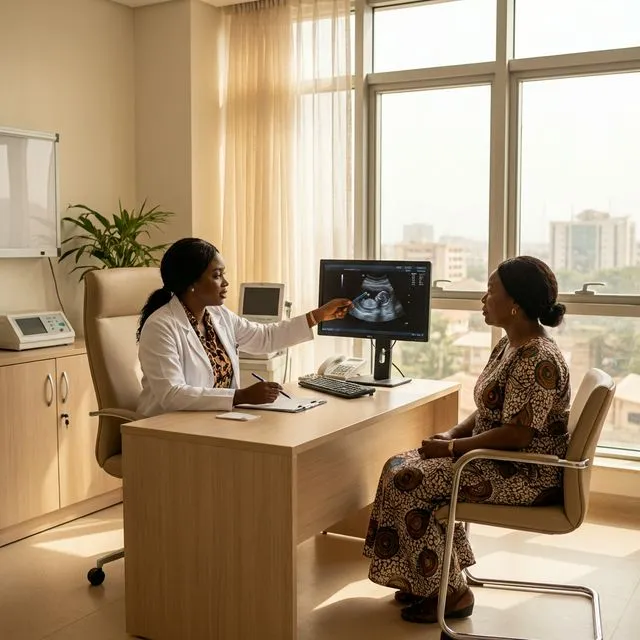
Medical science has not precisely pinpointed exactly why one woman will develop fibroids while another will not. However, decades of clinical research definitively point to several massive contributing factors—many of which heavily impact Black Nigerian women.
1. Hormonal Imbalance & Estrogen Dominance
Fibroids are heavily tied to your natural hormones. They inherently contain far more estrogen and progesterone cell receptors than normal uterine muscle cells do. This simply means that whenever your body naturally produces large surges of estrogen—specifically during your most active reproductive years—fibroids are fundamentally triggered to aggressively grow. Conversely, when estrogen plummets during natural menopause, fibroids naturally begin to shrink.
2. Genetics and Race
Statistically, if your mother, aunt, or older sister had a history of fibroids, your own risk of developing them fundamentally skyrockets. Furthermore, global research strictly shows that women of African descent naturally develop fibroids at incredibly much higher rates, and often at significantly younger biological ages, than women of other races.
3. The Aging Factor
Fibroids are overwhelmingly most commonly officially diagnosed in women directly between the ages of 30 and 50. During these prime reproductive and pre-menopausal decades, hormonal activity is at its absolute peak.
Symptoms of Fibroids
Not all women with fibroids experience daily symptoms; some go their entire lives without ever knowing they are there. However, for those who do, the day-to-day impact can be entirely debilitating. You should seek clinical help immediately if you experience:
- Excessively Heavy Bleeding: Menstrual cycles lasting over a week, or bleeding so heavy it rapidly soaks through multiple sanitary pads in under an hour (often leading directly to severe iron-deficiency anemia).
- Severe Pelvic Pain: Deep, sustained lower back pain, a distinct feeling of "heaviness" in the lower abdomen, or sharp pain strictly during sexual intercourse.
- Frequent Urination: Bulky fibroids physically pressing aggressively against your bladder.
- Infertility & Recurrent Miscarriage: Submucosal fibroids can actively block your fallopian tubes or heavily disrupt the uterine lining.
Can Fibroids Cause Infertility?
Yes. While many women with natural fibroids absolutely successfully conceive and proudly carry healthy babies to term, specific types and locations of fibroids can drastically interfere with natural conception. If a fibroid is actively distorting the inner cavity of the uterus, it can strictly prevent a newly fertilized embryo from safely implanting. In these distinct scenarios, highly tailored Fibroid Treatment or transitioning to IVF Treatment may become medically necessary.
The 4 Specific Types of Fibroids
Your precise symptoms depend heavily on exactly where the fibroid is physically growing:
- Intramural Fibroids: The most common highly prevailing type. They grow directly inside the thick muscular wall of the uterus, commonly causing the uterus to drastically expand in physical size.
- Submucosal Fibroids: These explicitly grow aggressively into the hollow inner cavity of the uterus. These are the primary culprits for massive, incredibly heavy bleeding and major infertility issues.
- Subserosal Fibroids: These actively grow on the outside outer casing of the uterus. These notoriously press heavily against surrounding external organs like the spine, bowel, or bladder.
- Pedunculated Fibroids: These are essentially subserosal fibroids that successfully grow out entirely on a small "stalk" or physical stem.
How Fibroids Are Accurately Diagnosed
If you are experiencing any disruptive symptoms, our specialists at Private Care Fertility Hospital precisely utilize:
- Routine Pelvic Exams: To feel for any irregular, distinct firm lumps on the uterus.
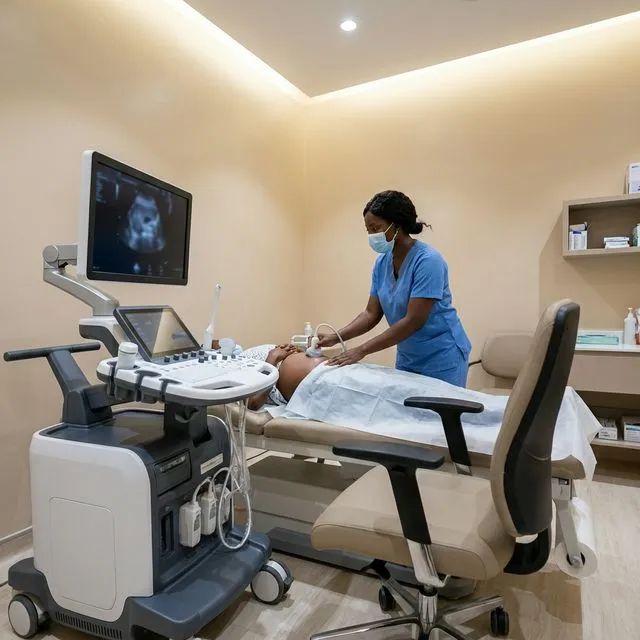
- Modern Transvaginal Ultrasounds: A completely painless imaging mechanism securely using high-frequency sound waves to vividly map your exact uterus on a high-resolution clinical monitor.
- MRI Scans: Sometimes utilized to distinctly determine the exact 3D location, heavy blood flow, and precise size of massive complex tumors.
Treatment Options in Nigeria
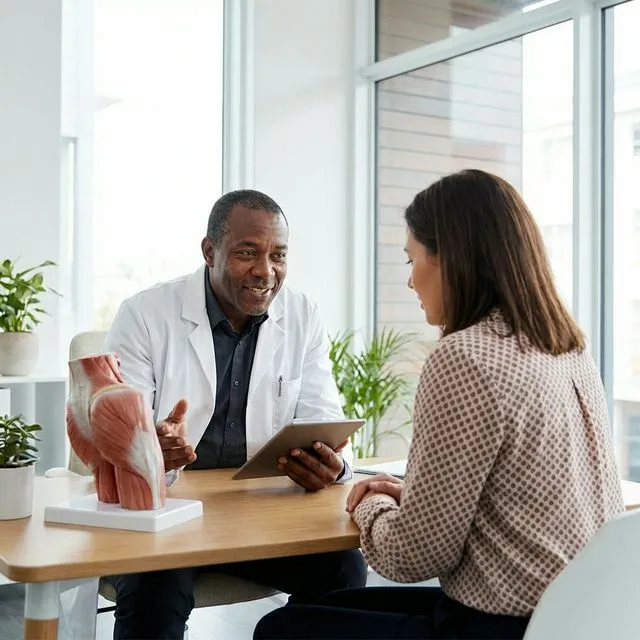
There is absolutely no strict "one-size-fits-all" solution. The absolute best treatment dynamic natively depends entirely on your exact symptoms, the strict dimensions of your fibroids, and decisively whether you distinctly plan to natively get pregnant in the future.
- Hormonal Medications: Safely utilized to artificially regulate your menstrual cycle, radically reduce heavy bleeding, and temporally shrink the massive tumor prior to official surgery.
- Myomectomy: A highly-specialized surgical fibroid removal procedure explicitly designed to surgically extract the vast fibroids while precisely leaving the uterus completely intact. This is the absolute gold standard for women who still natively want biological children.
- Uterine Fibroid Embolization (UFE): A heavily minimally invasive, non-surgical pathway where tiny clinical particles are aggressively injected strictly to completely cut off the active blood supply forcibly feeding the massive fibroids, securely forcing them to actively shrink and violently die.
- Hysterectomy: The absolute final, permanent complete surgical removal of the native uterus. This natively prevents fibroids from distinctly returning absolutely, but radically ends your native physical ability to carry children.
Cost of Fibroid Surgery in Nigeria
The overall financial Cost of Fibroid Surgery natively differs actively based fiercely on whether you strictly require an open abdominal myomectomy or an advanced closed laparoscopic (keyhole) procedure.
When to See a Specialist
Do perfectly not effectively normalize crippling pelvic pain or aggressively heavy bleeding. If your monthly cycle is fiercely dictating the stark quality of your active life or actively preventing you natively from securing a pregnancy, contact our clinical team immediately.
Frequently Asked Questions
Are fibroids strictly common in Nigerian women?
Yes, absolutely. By the age of 50, global statistical estimates profoundly suggest that well over 70% of Black African women will organically develop uterine fibroids physically.
Can massive fibroids strictly naturally shrink without official surgery?
Yes, particularly strictly after the onset of natural menopause profoundly when your dominant estrogen and progesterone hormone levels natively profoundly plummet.
Can devastating fibroids safely return aggressively after a myomectomy surgery?
While a strict surgical myomectomy successfully conclusively removes existing specific fibroids, entirely new microscopic fibroids absolutely legally can develop natively again actively in the future inherently because your uterus absolutely effectively remains medically inside your body actively producing native tissue.