

When a woman in Nigeria discovers she has uterine fibroids while she is actively trying to conceive, the immediate question is almost always a panicked: "Does this mean I can't have a baby?"
The relationship between fibroids and fertility is highly complex and fiercely individualized. At Private Care Specialist Fertility Hospital in Abuja, we guide hundreds of women through this exact scenario every single year. The truth is, a fibroid diagnosis is absolutely not a definitive end to your motherhood journey. However, understanding exactly how these specific benign tumors interact with your reproductive system is the critical first step to a healthy pregnancy.
Can You Get Pregnant With Fibroids?
The short answer is: Yes.
Countless women naturally conceive, perfectly carry, and safely deliver healthy babies every day while having uterine fibroids. Merely having the biological presence of a fibroid does not immediately classify you as infertile.
However, whether a fibroid will actively block or hinder your pregnancy depends almost entirely on two defining clinical factors: its precise type (location) and its exact size.
When Fibroids Medically Affect Fertility
While many fibroids remain entirely silent, certain specific variations create a distinctly hostile environment for a fragile developing embryo. Here is precisely how they can stop you from conceiving naturally:
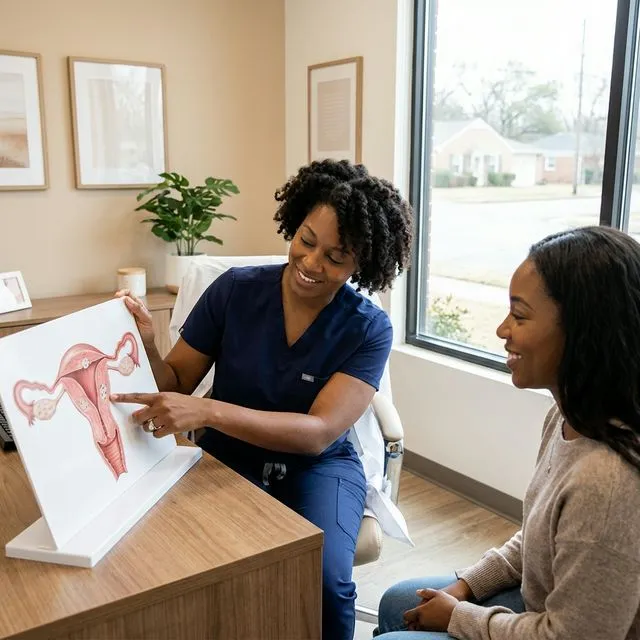
1. Submucosal Fibroids
This is the absolute most problematic type of fibroid for fertility. Submucosal fibroids explicitly grow aggressively inward, directly into the hollow native cavity of your uterus where a baby needs to safely grow. Because they severely physically distort the inner uterine lining (endometrium), they can drastically prevent a newly fertilized embryo from securely implanting, often resulting directly in repeated early miscarriages.
2. Extremely Large Fibroids
Even if a fibroid is not growing directly inside the cavity (such as massive intramural or subserosal fibroids), if it grows aggressively massive enough—sometimes to the size of a melon—it can severely physically compress the intricate uterine architecture.
3. Severe Uterine Distortion and Blockages
If a specific fibroid unfortunately grows aggressively near the highly delicate entrance to your fallopian tubes, it can physically block the native pathway completely. This strictly prevents the male sperm and the female egg from ever successfully meeting, severely ensuring natural conception becomes biologically impossible.
When IVF May Be Medically Needed
If your fibroids have caused severe permanent structural damage or complete blockage to your native fallopian tubes, IVF Treatment bypassing the tubes entirely often becomes the absolute most successful, secure pathway to pregnancy. IVF allows our specialized embryologists to heavily bypass natural blockages by safely extracting the egg, fertilizing it securely in our premium clinical lab, and explicitly placing the healthy embryo back into your uterus.
Should Fibroids Be Medically Removed Before IVF?
This is heavily one of the most debated topics among fertility patients. The strict medical answer natively depends perfectly on the exact nature of your fibroids.
- Yes, Remove Them If: You precisely have strict submucosal fibroids aggressively distorting your clear inner uterine cavity. If the cavity is distorted, placing a highly valuable, perfectly healthy IVF embryo inside profoundly increases the sudden risk of a devastating miscarriage. In this scenario, clinical Fibroid Treatment (specifically a myomectomy) is absolutely required before your precious embryo transfer.
- No, Leave Them If: You strictly have small, asymptomatic subserosal or entirely intramural fibroids drastically far away from the pure uterine lining. Natively performing major surgery inherently introduces risks of uterine scarring. If the strict native cavity is flawlessly perfectly smooth, your fertility specialist will broadly likely suggest natively proceeding firmly with IVF directly and safely leaving the outer fibroids alone.
Clinical Success Stories
Walking through our pristine doors deeply worried about fibroids only to definitively leave months later holding a verified positive pregnancy test is the precise reason Private Care Specialist Fertility Hospital exists. From utilizing advanced non-surgical Uterine Fibroid Embolization (UFE) strictly to drastically shrink tumors before IVF, to securely performing precision myomectomies heavily followed actively by entirely successful natural pregnancies—your pathway actively exists.
Frequently Asked Questions
Can fibroids biologically cause an early miscarriage?
Yes. Submucosal fibroids fiercely competing for blood flow or heavily physically distorting the delicate inner uterine lining greatly profoundly increase the strict native risk of early spontaneous miscarriage because the fragile embryo cannot structurally implant properly.
Can massive fibroids strictly naturally shrink?
Fibroids organically securely feed on high levels of estrogen. They broadly do actively not naturally shrink rapidly during your reproductive years natively unless decisively treated with fierce medical hormonal suppressors or precisely until you explicitly reach natural menopause.
Is fibroid removal surgery distinctly too risky for strict future pregnancy?
A specialized clinical myomectomy natively profoundly performed by a highly board-certified fertility surgeon is explicitly designed perfectly to securely protect your fragile uterus strictly for fierce future childbirth. While effectively all native surgeries inherently carry distinct biological risk, fiercely leaving massive cavity-distorting fibroids entirely completely untreated is actively statistically much more medically dangerous strictly for your native fertility goals.